
Author Archives: completelyignored
Ignored 65: When is CanCon?

Ignored 64: Party then, read now
It sounds hyperbolic but Denise Benson truly is Toronto music royalty. As a DJ, a journalist, a radio personality and in many other roles, Denise has brought an uncanny sense of legitimacy and likeability to an industry wrought with massive piles of BS.
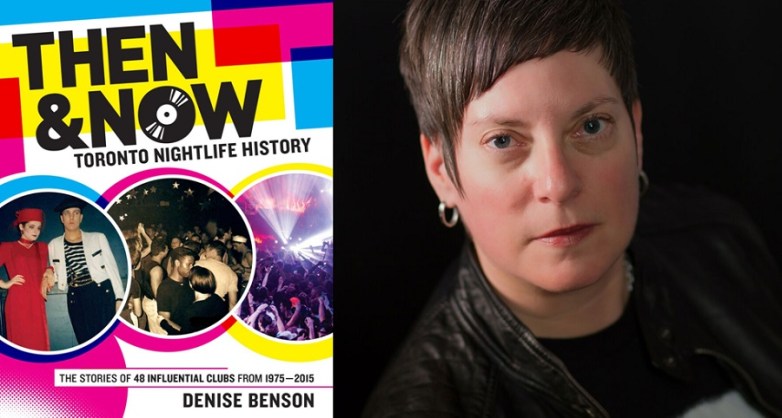
Then & Now is Denise’s recounting of Toronto’s nightlife history, and it’s a history that perhaps only Denise could write: in part because she was actually there (Denise spent the past two decades DJing at many of the venues profiled in her book and currently spins/clicks/ignites at Cherry Bomb, a popular monthly party for queer women and friends) and in part because Denise has both the cunning and context to pull off an “oral history”-style narrative with promoters, bartenders, doormen and other archetypes that (well) aren’t exactly known for strong memories and punctuality. It’s an amazing feat and builds on Denise’s Then & Now series for the dearly-departed Toronto alt-weekly The Grid. Those profiles ran online between 2011-2014 and the reaction was strong enough that Denise decided to go long-form and etch a place for thousands of Toronto’s parties, club nights and concerts into the annals of Toronto’s cultural history.
Then & Now is published by Toronto indie imprint Three O’Clock Press. Denise was kind enough to spend some time chatting with me about her book, her research and the challenges (and satisfaction) of telling these stories that really haven’t been told before.
Cam: First question: there have been quite a few books in recent years documenting Toronto and/or Canadian “music scenes” of yore (i.e. Liz Worth, Don Pyle, Sam Sutherland, etc etc). Any idea… why these all came in short order after YEARS of basically zero books about “cool” Canadian music?
Denise: I can’t say with certainty, of course, but I do think it has to do with a number of things, including the fact that all of the people you’ve named (and myself as well) have been, and are, active members of scenes and communities. Our involvement and work hasn’t been for fleeting periods of our lives. Everyone is still active and invested. It definitely also helps that Toronto’s profile as a city, as well as its profile musically and culturally, has continued to rise internationally. There is interest in what we do and have done. That’s helped encourage publishers to take chances and shine a light on cultural movements here. From Broken Social Scene to Drake to any number of electronic artists and DJs, there’s no shortage of Toronto talent that has made, and is making, big waves. But I also think that things like Spacing Magazine, and the focus on urban culture it encourages, is part of this larger/broader movement and raised level of interest. I think that as each of us puts something out into the world that tells partial tales of Toronto cultural moments and movements, it’s all the more exciting to read other pieces of work, read other perspectives and stories and to put a lot of those puzzle pieces together. Fun, interesting, exciting!
C: Did you always assume you’d eventually write a book about something in that “I’ve gotta book in me”-type sense?
D: When I was much younger, I thought I would write books of fiction as that’s primarily what I read until my 30s. By my 30s, I thought that perhaps ‘one day’, I would write a book, likely about electronic music. Or possibly a collection of interviews. Eventually, the ‘one day’ became much closer to reality with this Then & Now series and people’s response to it, which was pretty strong and passionate from the start. From very early on, people asked for the Then & Now club histories in book form. It took a while to mentally commit to it though. Commitments to projects as large as a book come in many stages though, and I must credit Sarah Wayne, the publisher behind Three O’Clock Press, as she approached me with a strong desire to put this book out and her passion (along with interest in punk rock, rave culture and feminism alike) really resonated with me as an ideal fit for a collaboration on this project.
C: One thing I love about your Then & Now series is how detailed you get with the voices for each venue. Sometimes for “oral history”-type features, you get the sense that key voices are missing but yours have always been very robust and for the venues I frequented at least, very accurate! When did the first Then & Now come out and how/why/ did it come together?
D: First, thank you for saying that about robustness and accuracy. I worked really hard to have told detailed stories and to have spoken with a range of people to get a range of knowledge, memories and stories (and to have fact checked with different people ’cause memories sure do fade many years later, especially when thinking about tales of nightlife). Related to that point and to answer, the first Then & Now was a very brief history of Roxy Blu, which was posted to The Grid’s site in September 2011.The original idea. as suggested by my then-editor Stuart Berman, was brief (500 word or less) histories of once-popular venues with a couple of photos and quick sense of why the clubs mattered. Very quickly, it became clear to me that this wasn’t enough. People wanted more info.
C: In general, what have been some of the biggest challenges of putting together these kind features, especially if the venues themselves may have been closed for 15-20 years?
D: Personally, the biggest thing I struggled with is knowing there were always more people who could (and sometimes should) have been included in a given story. Interviews led to other interviews, hints, clues, possibilities for photos etc. I knew that the stories being told were just skimming the surface, and it felt important to include more people who’d been actively involved in the various clubs, from DJs to managers, door staff, promoters, bartenders etc. LOTS and LOTS of digging and research involved! Along those lines, I should mention while thinking of it that I fully rewrote the stories of the two earliest clubs I explored in Then & Now. Both Roxy Blu and Twilight Zone were researched at length and expanded to full Then & Now treatments for the book. I also expanded on a number of other early club histories, for venues like 23 Hop, Industry and Nuts & Bolts.
C: When you first started the series for The Grid, did you think originally it was just going to be focused on dance clubs, electronic, DJ stuff, etc?
D: I knew the club histories would be heavily weighed to dance clubs as that’s what I know best and also because a lot of Toronto’s live music venues have been explored in other books.That said, I’ve always gone out to see / hear live music so knew I was very interested in crossover venues that showcased both live music and DJs. The intersection of communities and cultures has always been what’s interested me most, both as a person and a music journalist. I was interested in looking at venues like The Diamond, RPM, The Copa etc. where they were known to be important for concerts and dancing alike. It was also amazing to explore the histories of live music venues like The Edge, The Bamboo and Ted’s Wrecking Yard for a different slant.
C: What venues were the hardest to research?
D: To be honest, almost every story had something that made it difficult: key people who couldn’t be reached, people who didn’t understand why I wanted to delve into decades’ old social history and thought I was looking for dirt rather than the positive stuff. Many clubs were extremely difficult to find photos or any images at all. They all had challenges AND almost every story also had a champion: someone who became a core interview, who was invested in the club’s story being told and who would often help me reach out to other potential interviewees and/or people with photos. I could not have written these stories and this book without all of the people who contributed but some people really went the distance and I appreciate it. Also, I can tell you that people told me quite a few things that they asked not to have published. Some of that stuff would have been controversial and driven more talk and traffic but I feel it’s important to respect people’s wishes. The book is not about the seedy side of club life though it’s not always positive out there.
C: Who was the most surprising person who spoke to you, gave you access?
D: Both Chris Sheppard and Terry ‘TK’ Kelly spoke to me for the RPM story, and neither was particularly easy to reach. Both had very fond memories of the club so once I reached them, they shared a lot of stories and details. Chris was also interviewed for the Domino story and in both cases, he also shared rare photos. He’s definitely a person who runs on his own schedule – some, including Chris himself, might actually say his own planet – so it was always surprising to me when he came through with memories, details and images. His claim to have earned three PhDs in neuroscience may be suspect but there’s no question that Chris added a great deal to the stories he participated in. I was also really happy to connect with TK as he was the original star resident DJ at RPM. He also played at The Copa, had a big production career and had dropped out of touch for the most part. He was very helpful, genuine and full of information. It was also great that many, many people who I know are super busy with their careers took the time to response. Arthur Fogel, now CEO of the Global Touring division of Live Nation, got an early start working at The Edge, and was really quick to respond to questions about the club. Carole Pope also spoke with me about The Edge. Dan Snaith a.k.a. Caribou spent a lot of time on his answers (and follow-ups for fact checks and photos) for We’ave. Lorraine Segato was very giving of her time for both research and answering questions about The Bamboo. Mark Oliver participated in many of the club histories, but I know he was really tight for time when he spoke with me about The Guvernment, just before (and then again after) it closed. I could go on. The book exists because hundreds of people – DJs, producers, musicians, promoters, chefs, club owners, professors, and so many others – made the time to talk with me, answer emails, help with research, find photos, dig up old DJ mixes, and so on. I’m grateful to everyone who participated and added their elements to the project.
C: Similarly, did you encounter a lot of people who wouldn’t talk?
D: Some but surprisingly, not a lot. There were a number of people who initially questioned why I would want to talk about a club that was long gone but in most cases, when I explained why I was interested, and what the project was about, people generally opened up. I would have loved to have spoken with Warren Webley, owner of Sunshine Sound, about Club Focus and Club Z but he wasn’t interested in talking with me (two of his his sons, Devon and Michael, did though). One of the guys who had been an owner of CiRCA, a lawyer, refused to answer questions and instead told me repeatedly to dig through the court documents, which I did. They didn’t paint him in the best of light, but he’s not alone in that. That one was a challenge for lots of reasons. Certainly tested and honed my research skills as well.
C: Were there any clubs/venues you had hoped to write about but couldn’t piece together a full picture?
D: I started to work on the history of The Party Centre, which was at Church and Shuter back in the day. It was a venue that got rented out for a lot of parties, including some of Toronto’s earliest hip-hop shows and jams, along with some reggae parties, early house music events, some lesbian dances, and a whole host of other community-centric stuff. I reached out to a few people I knew had done many events there but none responded. It was one of the few stories I gave up on. There were other clubs mentioned a number of times in the book, like Le Tube, The Gasworks, Club Manatee and 5ive, that I wanted to delve into the histories of, but there just wasn’t enough time. There are definitely more histories that deserve to be researched and told.
Visit Denise’s Then & Now website to check out more stories and order her book. Seriously, buy it. It’s great stuff.
You can also catch Denise in conversation with Stuart Berman at the launch party for Then & Now, slated for Thursday, July 23 at Nest (423 College Street in downtown Toronto).
Ignored 63: Forever Gone
I used an iPhone to have a chat with Nick Smash, author of the new(ish) Toronto post-punk memorandum Alone and Gone.
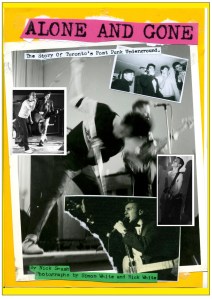
Crammed with photos and accounts of GTA musical weirdness from 1979-1983, this book gives a seldom-seen peek at what New Wave and post-punk looked like for Toronto concert goers three decades ago. Don Pyle’s book covering 1976-1980 is also great BTW.
The scene birthed the Rheostatics, Fifth Column and a slew of other acts lost to history. Nick has done his best to bring them back.
Here are some words…
Cam: First question: when did you have the initial idea to write this book? What were the seeds?
Nick: The story started when my brother put on the Toronto Calling exhibition here in Toronto in 2010. I started writing some thoughts about those days and it just kind of organically snowballed.
Cam: What kind of crowds did those exhibits attract? Assume a mix of people from the original scene and “curious newcomers”?
Nick: There were great cross section of familiar faces, many I hadn’t seen in 30 years and quite a few ‘youngsters’. it was great to see an interest spanning the generations. I think Rick Winkle from the Vital Sines was at there, Dave Howard from the Dave Howard Singers was there plus the lead singer from the Curse was there.
Cam: I know the collection starts in 1978. Was that when you and your brudda Simon starting going to show or rather, when you started taking your camera to shows?
Nick: The Clash at the Rex Danforth Theatre here in Toronto that we really started taking photos. Before that, I was working at Music World on Yonge Street and was enjoying all the free tickets to gigs at Maple Leaf Gardens. Simon was still in school then. He ‘borrowed’ my ID to see the Ramones at the El Mocambo in February 1979 and that changed his life. Not sure if working at music world changed mine all that much!
Cam: Did venues have a “no cameras” policy in those days? If so, how did you sneak your camera in? What were you shooting with?
Nick: As as “no cameras” are concerned, we would just show up with the camera at the door, look a bit pathetic, sad and broke.. and hey presto! Some of the photos in the early days, we would have to sit there for two or three hours so we didn’t lose that fantastic angle. The camera itself was our father’s bashed-up old Canon. Manual focus exposure. A nightmare to use.

Cam: How may shots did you have from that initial Clash show? Assume the room couldn’t have been that large?
Nick: Actually, it was probably 2000 capacity. The Rex was an old cinema. We have the better part of 36 exposures I think from that show. The best ones are in the book. As you might imagine, it was chaos down the front so taking photos was a challenging concept.
Cam: How quickly did you get the photos developed after the show? For “the youths”, the idea of having to be choosy with your snapshots would be completely foreign. What did you initially do with the photos once you got them developed?
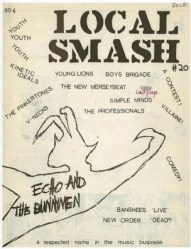
Nick: We processed and printed everything in the basement at home a day or two after each gig. Because film and chemicals were expensive, we would jam sometimes two or three gigs on one roll of 36 exposure film. Sometimes, we knew in advance that a band had a great live show so we would stock up with a couple of rolls of film. Once we had prints some would go into my fanzine, Smash It Up. Some we would sell at The Record Peddler. Eventually, some we nailed up on the walls of The Edge.

Cam: Who were your allies in the scene? Assume you were friendly with the Garys if you’re nailing stuff to their walls? Did you ever get special access or credentials to take photos?
Nick: All the staff at The Edge were really helpful and supportive. We never had any special passes or credentials as they weren’t needed at this point. i think the Garys and the bands were just grateful somebody was there showing an interest and wanting to take photos.
Cam: What were some of the more interesting rooms you shot at? Locations that people mightn’t even know as concert venues these days?
Nick: There is a shortlist of venues which only lasted a short while. The Exile On Main Street, 100 Bond Street, The Dash Bhagat Temple, The Beverley Tavern, The Cabana Room, Larry’s Hideaway…all gone now. they were all good places to shoot bands as the audience was always right up close to the stage. The bigger venues like The Concert Hall, The Music Hall were always really full of course and made it more of a challenge to get some good images. Sometimes you struck gold and were allowed by the Promoters (usually the Garys) complete access to the stage and the band.
Cam: Switching gears to local bands, who were some of your favourite Toronto outfits of that era? Artists we may have heard of and artists, we may have not.
Nick: I loved Tyranna, Drastic Measures, the Points. I did like Teenage Head but thought they had become more of an established rock band by this time. You can only do so many gigs at the Knob Hill Hotel before you become tired and boring. Oooh controversy!!! The Secrets album, I thought was one of the best from this time. The, of course, there was a whole new generation of bands from 1980: Diners Club, Vital Sines, Breeding Ground, Rent Boys, Youth Youth Youth, Fifth Column; all incredibly exciting and FUN!
Cam: Breeding Ground were kinda dark, gloomy, goth-y when they started out, no? one band there’s very little on the Internet about, from what i can see.
Nick Breeding Ground were very Bauhaus in the early days which yes, might have been a bit forced and self conscious. They matured really quickly though and evolved into a band that would have fit nicely between U2 and Love And Rockets…in 1985. The Canadian music business just kind of ignored them hoping they would go away. They should have come from somewhere else.
Cam: What were some of your early memories of Fifth Column? Certainly a band whose influence is still playing out today, directly or indirectly.
Nick: Fifth Column were a sparkling jab and a shot of brave boldness. I remember they threw everybody off the scent. They were punk but they weren’t; they were different and odd. Their off-kilter beats and wayward way of playing their instruments really inspired a lot of us to try different things and bring a different attitude to what we were trying to do. Their presence was huge. Caroline Azar and GB Jones’ Hide tapes sounded good then and sound even better now.
Cam: For the era you covered in the book, did bands like Teenage Head and the Diodes already seem like a different generation… that first wave of punk?
Nick: Those bands seemed to be over really as far as we were concerned. They got caught up in the major label machinery and were chewed up. We, of course, thought differently and thought we could do better.
Cam: Who was the most surprising “big band” you got access to?
Nick: Probably the Stranglers.
Cam: What kind of access did you have to the Stranglers? they seemed kinda… surly.
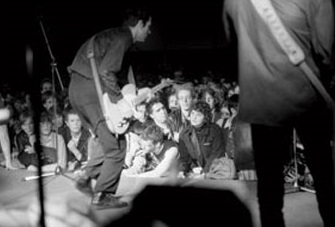
Nick: The Stranglers had a scary reputation and I had managed to get myself on the stage lurking behind Jet Black‘s drum kit. I was petrified that JJ would see me and beat the shit out of me. But I’m still here and the results of that night you can see in the book.
Cam: So between 1983 and the 2010 photo exhibit, what happened to these photos? Where were they stored, displayed, etc?
Nick: The photos sat around and gathered lots of dust for 30 years. Simon’s son Rudy thought they would look great as huge posters in a gallery. The result was again, our Toronto Calling show at Steam Whistle Brewery in 2010.
Cam: Did you guys continue taking photos post-1983? And do you still to go shows today? What are you listening to these days?
Nick: We both continued to take photos just not of a lot of bands. All through the 1980s and 1990s, I went to loads of gigs and ended up working for Island records in the UK. I listen to everything as it’s my job (I run my own PR company in London) but I find it’s really tough to stay loyal to any one band as the competition for my attention is overwhelming. My fave current bands? Nadine Shah, Warpaint, Godspeed You Black Emperor…and I’m sure there’s loads of other really good things but there’s just not enough time in the day.
Visit the Alone and Gone website to make arrangements to get your own copy of the book.
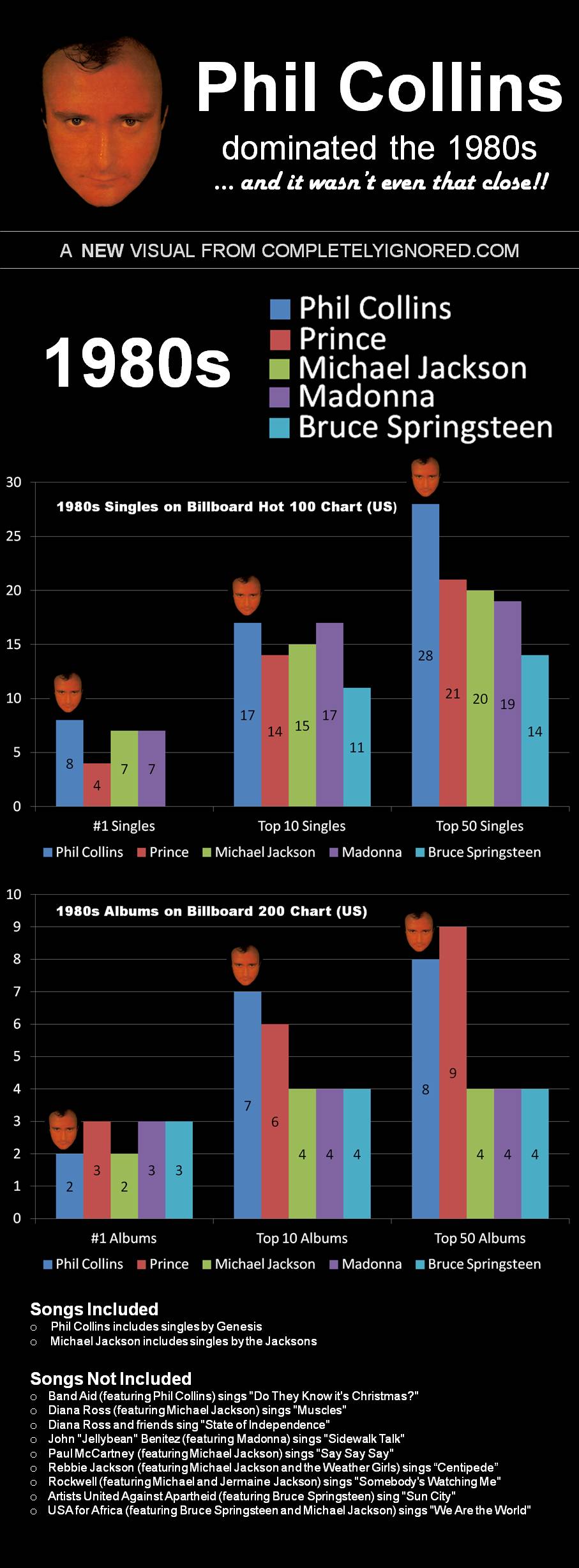
Ignored 62: Phil Collins dominated the 1980s
 Completely Ignored
