Ignored 31: Hammer time

ignored31

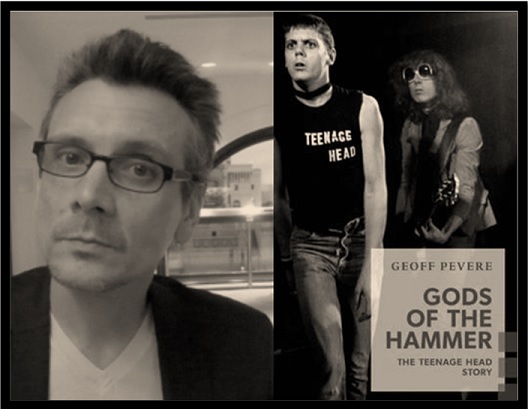
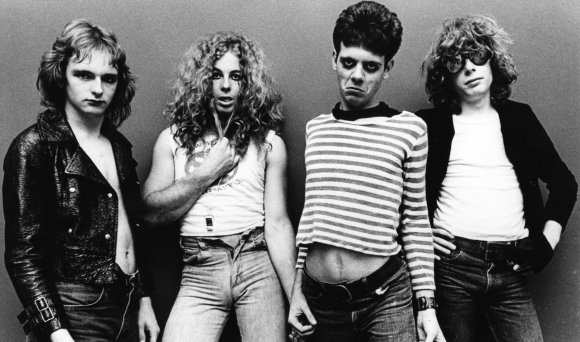
Gods of the Hammer: The Teenage Head Story is a new book coming later this month from Geoff Pevere. You might know Geoff from his movie column in the Globe and Mail or his past contributions to the Toronto Star, CBC and various book shelves. You might know Teenage Head from the radio or from history or maybe you don’t. After all, from what I can tell, Teenage Head are a bit of an anomaly in the annals of Canadian popular music. Too punk to be categorized as classic rock and yet too revivalist to be fully embraced by the punk crowd, the Teenage Head story is rooted in energy, loud guitars, interesting hair, bad management, the streets of Hamilton, a riot, a car accident and a staggeringly consistent discography that holds up (and possibly improves) as the years pass.
geoff_2

Geoff was kind enough to spend a little time with me on Facebook, answering questions about his book and sharing a few thoughts on why the band left such an impression on him both as a music writer and, more importantly, as a music fan.

Cam: Thanks again for taking the time. I was born in 1977 so I was a kid during the prime Teenage Head years but I’ve always thought they were really under-appreciated in the broader sense. First question: how long did it take you to write the book and when did the idea first come to you?

Geoff: The book took about a year exactly. I was approached by Jason McBride of Coach House books. He asked me to pitch an idea for their new Exploded Views series — short books by authors on subjects they’re obsessed with — and I almost instantly said ‘Teenage Head’, a band I first saw in 1978, saw more times than any other band and a band that created a noise that’s been ringing in my ears for 35 years. I too always thought they were way, way, way under-appreciated, despite the fact their underground legend persists to this day.

Cam: It always seemed like they didn’t squarely “fit” anywhere. Q107 has no issues playing “Let’s Shake” to this day but they’re not a Q107-type band. They did the whole punk Larry’s Hideaway/Last Pogo thing but they weren’t really a punk band in the textbook sense (in my opinion). Is that part of the appeal do you think? Where does your obsession stem from?

Geoff: It’s true. They didn’t really fit anything, unless you call “pure, simple, three-chord, balls-to-the-wall white-guy, blue-collar” rock a category. Which I guess it is, but not in the insanely label-driven music business, which was especially insanely label-driven in the punk and post-punk era. All I know is, when I first heard the song “Picture My Face”, which sounded to me like a bubble-gum song played by the New York Dolls, I was in for good. They came along just in time to get swept up in the whole punk thing, but really they were a glam-rock, almost proto-metal outfit of the Alice, Iggy, Slade, Mott stream. What got me instantly and totally were the hooks in the songs — eargasmic — the precision of the playing the ferocity of the performance. Canada didn’t know what to do with them, radio didn’t know what to do with them, the recording industry didn’t know what to do with them, and you had to go and see them live to fully appreciate just how original, intense and powerful they were. This just wasn’t supposed to happen in this country, and it was so fucking good the fact it happened in this country only seemed incidental: these guys were as good as rock music got. Period.

Cam: Yeah, for somebody who only discovered them in retrospect, much that’s written about the early days paints the picture of a totally different band live. When did you see them for the first time? Based on their albums at least, I always thought they were closer to Cheap Trick than the Sex Pistols.

Geoff: Cheap Trick is a totally valid comparison. But where Cheap Trick kinda tilted more toward the commercial metal side, Teenage Head tilted more toward the tighter sonic structure of punk. But in terms of a highly refined, amped-up pop sensibility, absolutely. When you consider that Alice Cooper’s Love It To Death was one of those albums that Teenage Head wouldn’t exist without, you get the idea. I think I first saw them in Ottawa, where I was going to university. And from the first night, I was committed. The songs were so good and insanely catchy, you actually left the bar with them in your head — not something you could say of a lot of so-called ‘punk’ acts of the time. And in order to hear those songs again — I’m talking before any vinyl or radio play — you had to go back to another live show. Fortunately, those guys gigged like a machine (ed: a small, small sampling).

Geoff: You know, it occurs to me that another apt comparison is The Replacements, but Teenage Head were way more consistently tight, melodic and consistent overall than the Mats.

Cam: I can see that. Kind of that bar band feel. It’s kind of a vague question but do you think as a Canadian band (from Hamilton!), they should have been bigger in a commercial sense? Especially with a track like “Something on my Mind”, that sounds like a totally multi-format hit to me. Every bit as good as the Cars or whatever else was huge power-pop-wise at the time. It seems like for Canadian “new wave” bands of that era, there was a limit. Teenage Head, the Spoons, Blue Peter,… they all seemed to get to a certain level but it’s kinda like there was a brick wall in the industry at that time.
Teenage_Head

Geoff: I don’t think there’s any question that if they had been able to get any consistent traction in the studio, working with a label and producer they were comfortable with and who knew them, they might have made a might big commercial impact. But they got bounced between labels, had no consistency in their studio experience, were poorly managed and for all that prevented from concentrating on writing and recording in a manner that would have yielded more great songs like their early ones — “Picture My Face”, “Top own”, “You’re Tearin’ Me Apart”, “Disgusteen”, “Let’s Shake”, etc. All you have to do is listen to the sessions recorded Daniel Rey and Marky Ramone with the band in 2003 to hear what might have been. That being said, it’s an incredibly legacy simply because it transcended all the shit they had heaped on them. Despite it all, we’re still talking, writing and listening to Teenage Head nearly four decades after they first roared out of the Hammer.

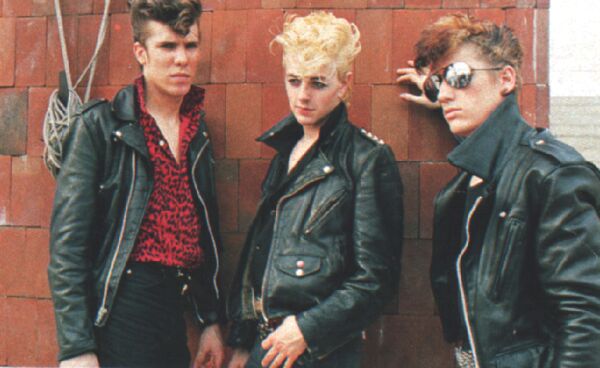
Cam: Yeah, I think it speaks both the quality and timeless of their music, and the lack of infrastructure in the industry at that time. It always seems like they could’ve been pushed harder in the 1950s vein and been Canada’s straight-up answer to the Stray Cats (which would’ve been awful from a marketing perspective).

Cam: I’d also like your take on why we’re seeing this flurry of books about Canadian punk with efforts from Don Pyle, Liz Worth and Sam Sutherland in recent years. Why now? There doesn’t appear to be an obvious catalyst with the exception of a general “passage of time”. I remember there was a wave of CD re-issues for the Mods, the Diodes, etc. maybe 10-12 years ago but kinda quiet since then. It’s pretty wild how undocumented a lot of this stuff was, considering there is still clearly an audience for it.

Geoff: Why now? That’s a totally good question. One of things I’ve noticed about cultural history in this country, and especially pop cultural history, is that it always has to be dragged kicking and screaming out of the closet and held up. Traditionally, our official approach to pop cultural history is very conservative, predictable and boring: CBC, the Junos, boomer nostalgia, etc. Or, for fuck’s sake, hockey. Lots of the more raw artistic enterprise this country has excelled in — improv comedy, comic book arts, horror movie making — has gone largely ignored until a certain geek boiling point is reached. I also think that when it comes to punk especially, that younger listeners who weren’t around for the ground zero first wave have an enormous curiosity that might even outstrip those of the original participants. This is partly because rock music as a formidable cultural force — one that could actually presume to be changing the world by changing its fashion — is now gone and because of that more romantic than ever. There is nothing more romantic, idealistic and irresistibly attractive than punk, the last real rebellion rock music can lay claim to. Which brings us right to the doorstep of the twentieth anniversary of Kurt Cobain’s suicide, the absolute final act of mythical rock romanticism. And, as you know, he was a huge punk worshipper.

Cam: I agree that romanticism about rock music, at least, is gone. If only because everything is so densely documented these days. By sheer volume of content available online (for free!), there is no real effort to being a music fan these days so I think stuff that is devoid of all those trappings is extra appealing. I mean… half of Teenage Head’s catalogue is out of print. Curious. How much time did you spend in Hamilton when you were writing the book? I went to university there and I think that’s partially where my fondness for the band comes from–they do kind of embody a “we’re from Hamilton and we’re OK with that” spirit. I think that’s one of their greatest attributes: there really is very little pretense with their music and there is a real sense of joy and spirit that most bands can’t capture.

Geoff: One of my favourite Hamilton quotes (which I heard more than once), goes like this: ‘Toronto didn’t know shit about punk until Hamilton drove down the highway and showed it how.’ I spent quite a bit of time there doing interviews for the book and I really came to appreciate what a proud, distinct, no-bullshit kind of place it is. And Teenage Head never let anybody forget that’s where they were from. If there’s anything distinctly Hamiltonian about them, it probably has something to do with the blend of work ethic, no-nonsense approach, sense of humour and firm commitment to having a really, really good time. Yeah, their website needs work, their back catalogue needs rescuing and re-release and their legacy needs some kind of formal structure in which to be protected, promoted and developed. How I hope all of that happens, If I had a secret agenda in writing the book, it was getting more Head out there.

Cam: I haven’t seen them since Frankie passed. What are your thoughts on keeping the band going w/o him? It’s obviously a different band w/o him.

Geoff: I think Pete MacAulay, the current singer, does a really great job, and he does so by not trying to be Frank. He’s an old school glam-rocker bantam rooster type with a different voice and approach to showmanship. Plus he came to the band as a lifelong fan. I think bands should stick around as long as they want to, and as long as people want to see and hear them. But what I’d really, really love to see some old unreleased recording released, some old live stuff released, and maybe some new solo recordings from Gord Lewis, perhaps backed up by all those countless younger musicians he got hooked in the first place.

Cam: I remember there was a band called the Vapids during my McMaster campus radio days that had an EP called the Teenage Head EP or something (ed: it wasn’t an EP). And even that was 15-20 years ago. You can see the patterns of generations discovering and keeping the band afloat.

Cam: Final-ish question: what was something surprising about the band you learned while writing the book?

Geoff: I think the most suprising thing is generally how unsuccessful they think they were. Surprising to me at least, considering the fact that with very little radio support, a totally inconsistent recording and management history, and almost no acknowledgement by our official guardians of national culture, they have managed to become legendary, and only moreso as time goes on. I always suspected that my obsessive enthusiasm was shared (I didn’t know just how widely) but was surprised to realize how the band itself felt they’d failed. Like (frig) they did.

Cam: Yeah, I’ve talked to Gordie a couple of times in that past and I always got the feel that he was surprised that anyone would want to talk to him. Again, it’s all kind of endearing to (ahem) “got no sense” of what their legacy actually is. Hopefully the book will help!

Geoff: There’s no justice in rock and roll Cam but there’s always idealism and hope. So even though I should know better after all these years I still cling to them both.

Gods of the Hammer: The Teenage Head Story is available April 30, 2014. Buy some copies here or here. Follow Geoff on Twitter at @GeoffPevere.
Ignored 30: Swerves

#ignored30

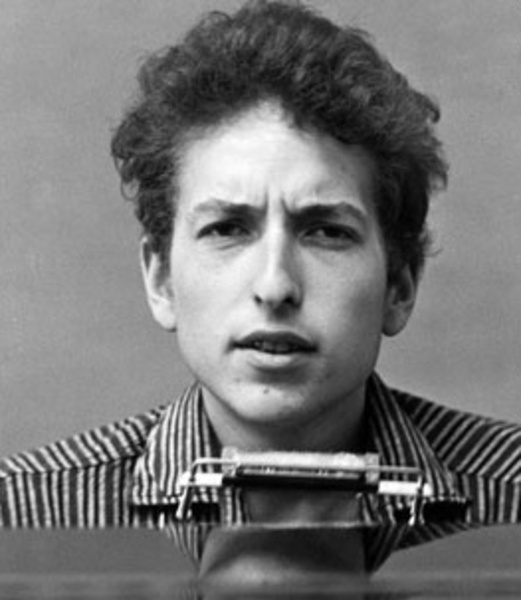
The latest chapter in my on-going dialogue with @dradam. We use a Rolling Stone article about Bob Dylan in the 1980s as basis for a discussion of what happens when artists reach middle age. Also discussed: Geddy Lee driving around North York and Thornhill.

Cam: You read this? http://www.rollingstone.com/music/news/humbled-in-the-eighties-jonathan-lethem-defends-dylans-lost-decade-20140314

Adam: Reading now

Adam: Interesting. there are a few highlight songs for sure, but it’s the Wilburys and Oh Mercy where he starts “amazingness” again.

Cam: It seemed like Neil Young and Elvis Costello (and maybe Tom Petty?) had a similar trajectory. Kinda hit-or-miss for the decade before ending the 1980s strong with Freedom, Spike and Full Moon Fever, respectively. At least from a dual critical/commercial sense. Although Spike may be a piece of (junk) in hindsight. Never heard it.

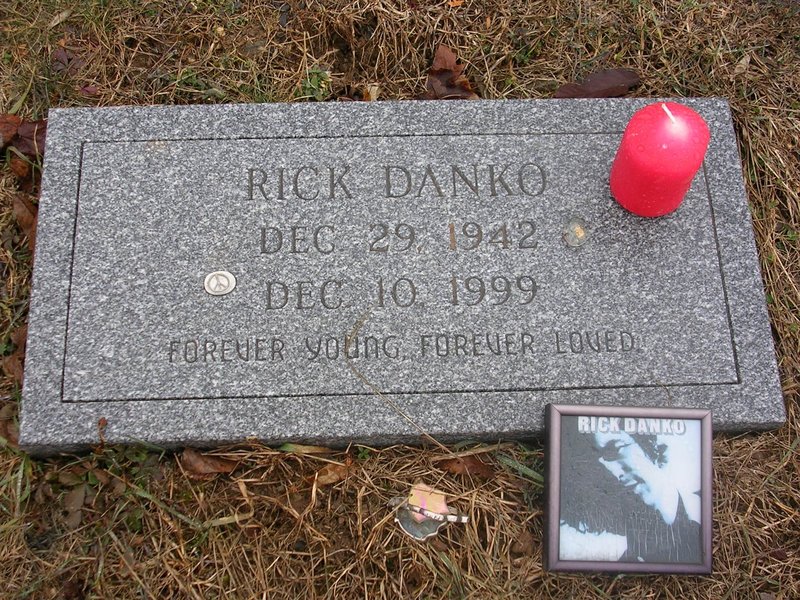
Adam: I’ve often thought about certain artist’s awkward years between their zenith or creative peak, and the time when they hopefully get to tour into perpetuity milking their catalogue, playing classic albums in their entirety, and letting their fans pass them onto the next generation of fans. But while Springsteen appears to be the golden god (or “Boss”, to be more accurate) at this point, he too went through a kind of awkward phase in the early 1990s when he disbanded the E Street Band, released two albums at once (when one would really have sufficed) and floated around with a moustache and goatee. He was doing songs for Jerry Mcgwaire (sic) and teasing the would be E Street Reunion with “Murder Incorporated”. But whenever I see any footage from Springsteen plugged, I can’t help but cringe (not just because he’s got a non-Clarence on the horn). Tunnel of Love followed BITUSA and was already Bruce trying to move away from what everyone seemed to want him to be. While at the time Tunnel was unfairly maligned for not eclipsing the incredible success and six singles from the previous album. The thing here is that Bruce was in control. he needed the break and took it. Then, cue the reunion tour and suddenly sparks are flying on E Street again. Elton John seemed to avoid this awkwardness though I’d argue there was a weird patch in the very late 1980s/early 1990s. While his star power and The Lion King vaulted him again, his album The One always seemed to me to be the ugly duckling (read: it sucked). It wasn’t ’til Songs from the West Coast that he put out an album again that was worth listening to, and that one certainly was. As one of those icons, his quality never really fell off completely despite the mountains of coke he was doing and most of Too Low for Zero. Yet his flat hat phase produced “I Guess That’s Why They Call it the Blues” and “I’m Still Standing” (though he apparently has no recollection of filming the latter video). Billy Joel didn’t hit his awkward gap till after River of Dreams I guess, and then just stopped creating new music. But he first hit in the 1970s, so the 1980s were still his latter wheelhouse. Same with Bruce. and Elton too. But look at the Band. they were THE Band. The biggest thing around, cresting, arguably with The Last Waltz. Then, Robbie broke up the Band (guess you only get one chance in life to play a song that goes like…but I digress), and they limped along through the 1980s doing non-Robbie tours, and dealing with their own demons (Rickie and Richard specifically, who didn’t make it out). I thought a lot about that during Levon’s victory lap at the end of his life. You go from superstar, to no longer hip enough for the kids you were playing to who got married and had kids and didn’t have time to devote themselves to your music anymore. If you were versatile, you bided your time to your next album. If you were a “one trick pony”, not so much. For some of the rock icons, their dry spell was short. Paul Simon’s Hearts and Bones was his first commercial flop. Then, he hit his jackpot with Graceland. Important to remember that these guys did not all start out at the same time. Bob, then Simon & Garfunkel came up in the folk boom of the early-to-mid 1960s. Paul Simon hit his solo success during the 1970s, had one bust, then had the huge comeback of Graceland and Rhythm of the Saints. Dylan had his first comeback in the 1970s with Blood on the Tracks, I believe. He’d already long changed his early image and after his bike accident, he became reclusive. Then, he hit big again with Blood and Desire and then toured with the Band. So Dylan’s 1980s, which started in 1979 with Slow Train and then Infidels, was a transition time for Bob. He also lost his direction, I think, and (maybe) was into drugs in the early 1980s, as most were. The problem with those albums is that they feel lazy. There’s not much on Empire Burlesque or Shot of Love or Knocked Out Loaded that I can even recall. Then, he gets with Lanois and makes his comeback on Oh Mercy before shitting out Under the Red Sky and Good As I Been to You. Both forgettable. That takes him to the early 1990s. He has his pericarditis scare and comes back for his encore with Time Out of Mind and his whole new career begins again. It’s quite amazing really. I think we all need to wander in the wilderness at some point and I can’t imagine it’s different with artists. Back to Levon: it made me sad to think that while he got to do those rambles and be everyone’s loveable musician grandfather, Richard Manuel and Ricky Danko couldn’t have toughed it out. They went from rock gods to playing in clubs. That must be hard to deal with. The 1980s sucked until the people who grew up in the 1980s hit their 30s and then felt nostalgic. Same with the 1990s and beyond. “Golden oldies” referred to the initial rock-and-roll pioneers by the 1960s. Nobody cared for a while until you see all these reunion videos from the early 1980s. The Everly Brothers at Royal Albert Hall for one. 1983 seemed like that awkward phase for the Grateful Dead. Not 1977-1980 anymore, not yet the big comeback of the “stadium Dead” and the “Touch of Grey” momentum or Jerry’s coma. Also, that’s when Jerry was sliding down the Persian heroin dragon slide and the music isn’t what it was from the height of a few years earlier. In short, different acts hit that awkward phase for different reasons. Nobody can be amazing all the time and your fans are fickle. Just ask U2 how long it took them to get back the fans after Pop.

Cam: These… these are thoughts!

Cam: Bruce… Tunnel of Love was definitely maligned at the time. Ostensibly, it flopped. However, what could he have done to commercially to follow-up Born in the USA? There was really nowhere to go but down. It was his break-up album but I dunno…. “Brilliant Disguise” stands up pretty well, “Tunnel of Love” is a good song caked in 1980s production, “One Step Up” is still a bummer. Not a bad album by any stretch. I think his true WTF was “Streets of Philadelphia” which isn’t a bad song per se but also, it’s a clear attempt to stay current. Y’know, brooding over (ahem) “hip-hop beats”.

Cam: Elton… I think he kind of avoided (an awkward phase) because his descent (ascent?) into pure adult contempo was pretty gradual through the late 1970s. I think he kinda of got a pass because there weren’t huge expectations on him, even based on his prime 1970s output. He was glammy but he’d never be Bowie. He did the singer/songwriter thing but he wasn’t Lennon or even Paul Simon. He was just consistently massive and nobody really gave a (darn). At least amongst snobs? So he starts doing songs for Disney cartoons… nobody really cared. From what I can tell, Elton purists aren’t very vocal or defensive.

Cam: Billy Joel… Similar arch to Elton although I think he tried to convey the “serious artist” card more (i.e. lots of press shots where he looked sad or contemplative). Therefore, crap like “We Didn’t Start the Fire” and “River of Dreams” seem laughably corny in retrospect (and at the time). It was never cool to like Billy Joel but I think even non-Billy Joel fans held him to a higher standard (artistically) than Elton John. He never dressed up like Donald Duck and played Dodger Stadium in a sequent baseball uniform. But Billy did have massive cornball moments in the early 1980s (i.e. the video for “Uptown Girl”) that somehow seemed less disposable than Elton John’s efforts of that era, even though the songs were probably worse. Give me “I Guess That’s Why They Call It the Blues” any day. Chuck Klosterman wrote a good essay on Billy Joel that talks about his positioning in rock music lore (or lack thereof). Companion piece.

Cam: The Band… Do big fans even consider their 1980s albums “real” Band efforts? I know zero about these, aside from the fact there is (I think) an angry cartoon pig on one of the covers. As a pretty casual fan, I can’t really imagine Rick Danko even existing post-Waltz. I do remember Levon getting trotted out at Bonnaroo and elsewhere in his final years but sadly, in a “holy shit, that guy’s still alive” fashion. And all the while, Robbie tried to shoehorn himself into the video era. You do realize from maybe 1984 to 1988, Robbie Robertson and Lou Reed were kind of running parallel in their efforts to fit into the MTV era? And now both seem MASSIVELY dated output-wise in the process. All that stuff… I’m kinda just talking out of my ass because I really don’t have a full sense of how these guys were received by fans/non-fans at the time. I was a toddler while this was going down As the first CompletelyIgnored.com essay points out (and the entire MO for the blog really), unless you literally lived through this stuff, it’s tougher to piece together the true arch from an ascent/descent perspective and have it resonate in a truly authentic (and less theoretical) fashion. To your point, these cycle repeat and always will with any artist that has legs career-wise. A few more recent examples of the “awkward phase”… Sonic Youth (Dirty… which I maintain is still a really solid album), Dinosaur Jr (Where You Been…. very similar quality- and sonic-wise to the previous two… kind of a “three strikes, you’re out” jag for those who were still pining for another version of Bug),  Mogwai (Rock Action… way shorter and less epic than previous efforts… Happy Music for Happy People might be my overall favourite but really, they just don’t make bad albums ever…. they’re never mind-blowingly amazing but they’re always good/very good)

Cam: I think the best modern parallel to the original “Dylan in the 1980s” theme is Beck. His first two widely-available albums (Mellow Gold and Odelay) were completely locked-in to a mid-1990s aesthetics, as much as Dylan was with his 1960s output (assumedly). Beck kinda retreated and messed around for a bit to close out the 1990s (Mutations) and then unloaded his real divisive moment (Midnight Vultures) maybe six years into his career. Everything since has been reasonably well-received and from the reviews I’ve read about his new album Morning Phase (which is great), they feel eerily similar to whatever was written about Neil’s Freedom or maybe Bob Dylan’s Time Out of Mind. In short, if you can last deep into a career and keep a reasonable amount of acclaim, your latter day output will definitely be graded on a curve. And in fairness, if you can keep people’s interest 10 or 15 or 25 albums in, that is SERIOUSLY impressive. Here is a related question: is it even fathomable that a current artist could stay relevant for 50 years like Dylan, Neil, Leonard Cohen have? It’s almost like talking about another pitcher winning 300 games and how unlikely that seems. Clayton Kershaw is arguably the most impressive (stuff-wise) lefthanded pitcher since Randy Johnson. He just turned 26 and he ONLY has 77 wins. And yet two Cy Youngs! Beck seems like a candidate and he’s got a good pace going now 20 years in. But could he seriously keep making well received albums for the next 30 years?!? Until 2044?!? Again, I can’t even wrap my head around the possibility. In the pop realm, this is even more unlikely. Sadly, I just watched the video of Lady GaGa getting barfed on by a dancer at SXSW. This is one of the biggest pop stars in the world and she’s resorting to little stunts like this that are clearly geared towards the YouTube crowd. One would think (hope?) that Madonna or Michael Jackson would never have stooped to this level of attention grabbing… and they were/are massive ego-maniacs!

Adam: Where to begin. “I Guess That’s Why They Call It the Blues” is one of my favorite songs of all-time. I love the song to death, I love the video, it makes me emotional that song. Must be something about the chord progression combined with tremendous lyrics (“…laughing like children / living like lovers / rolling like thunder / under the covers”) and “… I simply love you more than I love life itself”. In WWII era England? Kills me every time. Also on my short list are “Amoreena”, “Bad Side of the Moon (live from 10-11-70)” then wonderfully covered and made famous by April Wine. Talk about an under appreciated band! Most of Madman Across the Water kills. “Holiday Inn” is a great road song that should’ve been in Almost Famous. There’s also a great live version of “Daniel” with a nice pulsing piano and a really nice energy that is better live than the flute-y feel of the studio track. I’ve got a soft spot for “Nikita” too. Too much music! I forgot about “Streets of Philadelphia”. I heard that during the commercial break before the Oscars performance of that tune, someone called out “Rosalita”! I love Tunnel of Love. Same time as Nothing Like the Sun by Sting. I’d call Desert Rose his awkward phase but he weathered the storm. I love the sound of Tunnel of Love. Very 1980s in a good way. “One Step Up” had a great lyric: “… check the furnace / she wasn’t burnin'”. “Brilliant Disguise” is the song I’d hold a sign up for at a Springsteen show if I didn’t hate doing that. Held a “Jungleland” sign at the (Sky)Dome first row when he came by but he wasn’t playing it that night. The video for it is directed by Jonanthan Demme (I think) and is a live performance on a long, slow zoom in shot in black-and-white. “Tougher Than the Rest” has a kick-ass harp solo to finish it out. Kind of like the piano outro on “Racing in the Street”. I judge Bruce’s awkward years by his facial hair. You know what I mean?

Adam: Also, thought I’d mention that I introduced the kids to “We Didn’t Start the Fire” this week and they loved it. I actually remember hearing it for the first time on a Sunday night “new music” spot on CHUM-FM, I think. Grade 7. They played the verse that starts “… Buddy Holly / Ben Hur / space monkey mafia”. They also played a part from Jive Bunny and the Mastermixer’s “Swing the Mood”. I purchased cassette singles of both I believe, though I had the storefront CD I think. “Swing the Mood” is just essentially this: The Royal Philharmonic Orchestra – Hooked On Classics Parts 1. Which although is nostalgic to hear, not nearly as perpetually listenable as this: Walter Murphy – A Fifth Of Beethoven [HQ]

Cam: Here we go… I totally forgot about “Tell Her About It”. A total craptastic piece of 1980s cheese and something that reminds me for 98.1 CHFI and accordingly, sitting in a dentist office. I hadn’t really thought about him trying to update doo wop (or thought about him much at all) but that totally is him trying to bring the Frankie Valli approach into the 1980s. I guess the modern equivalent might be…. parts of Bruno Mars? It does seem like a bit of a swerve considering he was positioned as “singer/songwriter” before and then shifted to a modified “song-and-dance man”. Amazingly in retrospect, he got his most early traction on “modern” MTV by aping a style of music that was more than 20 years old at the time. Having Christie Brinkley mincing about in there no doubt helped. I actually kind of like “Allentown” although it seems a bit too jovial for an “issues” song. Songs about labour that don’t sound like Pete Seeger or Billy Bragg are often weird/clunky but BJ pulls no punches considering how the song starts: “… well, we’re living here in Allentown / and they’re closing all the factories down”. I like the Wikipedia page talks about the then-mayor’s reaction to the tune. It seems a bit invasive considering he didn’t grow up in Pennsylvania but is more coherent (rightly or wrongly) than the Rheostatics’ “Horses” and more sympathetic (though less awesome) than Rush’s “Working Man”. “Allentown” totally sounds like BJ trying to write a Randy Newman song, right? File under “what would Randy Newman do”. Complete WTF on the video. Considering the song is supposedly about the plight of the working class, the clip is massively campy and really inconsistent with the tone of the song. I guess the TV show Fame was big in-and-around the time of that song? It’s like a musical theatre version of what working in a factory would be like with BJ dressed like a slightly more handsome Emmett Kelly.

Cam: “A Fifth of Beethoven” is a textbook novelty song but could it be argued that this was the first mash-up? Is Girl Talk an “evolutionary Walter Murphy” as our friend Bill Simmons would say? This perhaps rivals Afrika Bambaataa’s “Planet Rock” as the most unlikely merging of the era that somehow works. I’d love for somebody to write a definitive piece (maybe they already have) on electronic music from, I dunno, 1974-1982 but not delineate between disco, Kraurock, early hip-hop, Top 40, Donna Summer, Giorgio Moroder, music for video games, etc. It’s sad hope deeply music gets segmented. I know next-to-nothing about disco but I think it’s always been unfairly pushed to the margins (in a critical sense) and never really given its just due on how much it impacted Top 40 in the 1980s and beyond. There is a really solid BBC documentary on Nile Rogers that is worth a look. He’s obviously not even an electronic artist per se but I think it does a really nice job of fixating on delving into the genesis of Chic and showing how his POV morphed through his work with David Bowie, Duran Duran, INXS, Madonna. Obviously, he’s getting a broad revisit/rediscovery because of his work with Daft Punk. I like his “it’s all just music; deal with it” approach. His set at Glastonbury 2013 is really awesome too–it’s almost like something you’d see on a cruise ship and completely unironic, sincere and celebratory. I’m curious that you put Eddie Vedder on your “built to last” list with Beck and Jeff Tweedy. I think Pearl Jam is completely fine but for yourself, for somebody who never “did” grunge”, was there a moment when you came around on PJ or EV specifically? I kinda feel like Snoop Dogg is going to be on that list too. Hip-hop is too young to even begin to speculate but “Big Snoop” has had incredible lasting power. I’ve always thought there are only two musicians who’d be equally at home on Sesame Street and in a pornographic film: Snoop and Gene Simmons. There’s gotta be some cache there.

Adam: We’re all in hyper-focused niches of consuming what we already like. I’m amused through-out these discussions about how you’ll start talking about vitally essential “alt-rock” artists and I’m thinking “Oh, I think I’ve heard that name once”. There is clearly a lot of crossover of mainstream stuff but our divergent tastes (and the obsessive way we get into those things) is cool. It’s why I like the Sam Dunn movies Global Metal and Metal: A Headbanger’s Journey despite not liking metal on any level and it sounding like noise. I dig that there are tribes who come together loving it, dress in their outfits (their black is my “carefully selected, just the right amount of cool” Dead shirt). and they’re as happy as they could be in their music, moving their bodies, along with 30,000 others. Just as Trading Places once taught us, there is a place for both nature AND nurture (I mean, look how quickly Valentine figured out the pork bellies market). Certain frequencies of music just sound good to me. Why? Definitely what I was raised on but I never liked the hard Pearl Jam or Blues Traveler stuff (and not for lack of exposure or trying). I like the part in the Rush movie where Trey Parker (or Matt- the curly haired one) is talking about how you pick who you like in high school: “Well, this is the smart band and I fancy myself a smart kid. This is what I’m about”. The hippie thing just felt right for me. It still does.

Cam: Did you see the The Story of Anvil? Both that and the Rush doc are great in that “you don’t even have to like the music” kind of way. More importantly, it’s pretty cool to see the roots of those bands in North York, very close to our beloved Thornhill. Those guys and their families really remind me of a lot of people I knew growing up. Plus it was pretty sweet to see Geddy Lee drive past that plaza where Newtonbrook Bowlerama is located in the back of a Lincoln.

Adam: I loved (the Rush doc). My fifth grade teacher was his first cousin. Everyone had a Geddy story. I sat behind him at a Leafs’ game once. His kids played ball at Bishop’s Cross. Jordan sat next to him once and kept talking about “Xanadu, trying I get his attention. They were going into Pancer’s Deli in the movie. I had the good pleasure of bumping into Sam Dunn at the airport a few years back as I was listening to “Far Cry”, one of the few later-era Rush songs on my iPod because it was the song through the final credits of the doc. So I’m sitting listening to the song from the movie and this long-haired guy walks past me. I “nerded” out a little on him. Gushed over both movies and how cool I thought it was that I didn’t get the music but I got the experience of the music. He was very nice. Talked about on-going projects with Iron Maiden and Alice Cooper. Asked him how cool it just be to be working for your heros. He was in the affirmative.

Ignored 29: An education

#ignored29

As a lifelong music fan, there will be times when you remember things wrong, assume an artist is something they’re not and have various WTF memories and misappropriations seep into your consciousness. The Internet and various reference manuals can help clear up these mistakes while others will follow you to the grave. It’s fun!

Here is a small sampling of musical misunderstandings I’ve had over the years. Obviously since I’m now writing about them on a WordPress blog, I’ve cleared up the details.

The video was Men without Hats “The Safety Dance” wasn’t an actual song but rather, a TV show for kids or maybe a TV commercial. This was 1984.

The video for M+M’s “Black Stations White Stations” wasn’t an actual song. Rather, it was a bumper for Citytv. In the spirit of Mark Daily’s “Citytv: Everywhere” contributions. Again, this was 1984.

The Fat Boys was a TV show and not a band.

Lou Gramm and Lou Reed were the same guy.

Strange Advance and the Escape Club were the same band. Confusion rooted in the former’s “Love Becomes Electric” and the latter’s “Wild Wild West”. Note: these songs sound nothing alike.

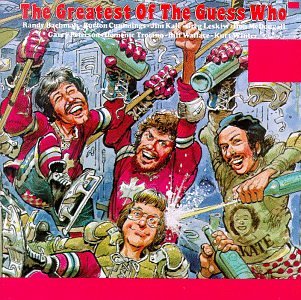
The Who and the Guess Who were the same band.

The Band were fictitious. No one where this came from. I think maybe I was vaguely aware of The Last Waltz and thought these were actors playing a band. Potential crossed wires when I became aware of other real fake bands like Spinal Tap and The Commitments.

Jeff Lynne from the Traveling Wilburys was not a real musician but actually somebody famous (not sure who… maybe an actor?) wearing a disguise.

Jane’s Addiction were Canadian and later, I’d confuse them with the Leslie Spit Treeo. The former’s “Been Caught Stealing” and the latter’s cover of John Prine’s “Angel from Montgomery” were both in rotation on 680 CFTR at the time. I think the opening of “Been…” with the dogs barking threw me somehow.

Spandau Ballet and Roxy Music were the same band.

Ice-T changed his name slightly and became Ice Cube.

Rumble was British. Aside: was there a more random one-hit wonder from this era? Some Jamaican guy from Toronto rapping over a Massive Attack song and hitting the Top 40.

James was a guy and then upon learning James was a band, assuming they were a heavy metal band. Later, I thought the song “Laid” was a Spirit of the West song. I was so confused.

Primus was a heavy metal band. Fair assumption since most people who liked Primus in 1993 were also into Metallica et all.

Pavement were a heavy metal band. The name just sounds heavy. There’s a scene in Pavement’s Slow Century DVD where Sonic Youth’s Thurston Moore cops to making the same assumption. Also, I thought their drummer Steve West was the singer for the longest time.

Dinosaur Jr were from the UK. Reason: their 1994 release Without a Sound came out on the UK-based imprint Blanco y Negro which I naively assumed meant they must be British too.

Sloan were from Boston.

The Cranberries were from Canada.

Catherine Wheel was a lady. I’m assuming more than half of 102.1 listeners of the 1990s also made this assumption?

Molly Hatchet was a lady.

Bettie Serveert was a lady.

PJ Harvey was a dude.

Pop Will Eat Itself were German. This was based purely on their 1994 single “Ich Bin Ein Auslander”. Once I learned they were British, I tried to share this knowledge with anyone who cared (estimate: 3-4 people, tops) and always got massive push back from people who insisted they were German, namely because of this song and also, their hair. Pre-Internet, these debates raged for months.

Tha Dogg Pound were a band that contained Snoop Dogg Dogg, Nate Dogg and friends. 95 per cent certain that Suge Knight hoped that the record buying public would make the same assumption. They did briefly.


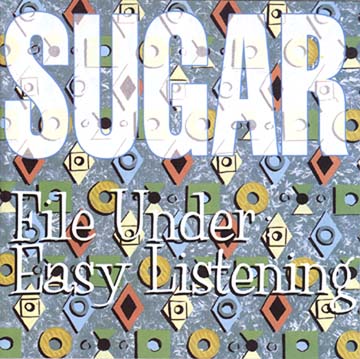
Sugar’s Beaster EP was actually an EP by the Beastie Boys. Beaster was one of those CDs you’d always see in vast quantities at used CD shops and whenever I’d catch a glance at this disc, I kinda just assumed it was a Beastie Boys’ release with some alternate spelling. In part, I think there was some confusion with the Beasties’ Some Old Bullshit EP that came out around the same time. Aside: has their even been a band with worse cover art than Sugar?

Buffalo Tom and Grant Lee Buffalo were the same band.

Tristan Psionic and SIANspheric were the same band.

Paul Weller and Paul Westerberg was the same dude.


The dude L.V. who sang the chorus of Coolio’s “Gangsta’s Paradise” was Luther Vandross. Not sure if I really believed this or just WANTED to believe it. It would’ve been a really unlikely transformation and pretty funny that Vandross could up his cred by reducing his stage to sinister…. initials!!! Also kinda funny: the real L.V. stood for “large variety”.

Big Star influenced the Beatles. My roommate in first-year university told me this and I just went with this. Obviously, this timing makes no sense since the Beatles were toast by the time Big Star even formed.

Peter Schilling’s “Major Tom” was actually sung by David Bowie. Obviously some confusion RE: Bowie’s “Space Oddity” and no doubt, Schilling was hoping to profit from the confusion. Note: the voice on “Major Tom” sounded nothing like David Bowie.

Yo La Tengo and Pizzicato Five were the same band.

The Birthday Party and the Wedding Present were the same band. This was fueled by the same gaff made in Alan Cross’ first book The Alternative Music Almanac where they mislabeled a shot of the Wedding Present playing at Lee’s Palace as the Birthday. The horror!

Death Cab for Cutie were heavy.

Crystal Castles were from either Europe or Chicago.

Wolf Eyes and Japanther were the same band and both from Toronto. Neither/nor.

Deerhunter and Deerhoof were the same band. Also, Deerhunter were heavy.

Big K.R.I.T. was British. He laid down some rhymes over an Adele track, after-all.

Mac Miller and Mac DeMarco were the same dude.

Ignored 28: No “Time Stand(s) Still”

ignored28

It must’ve been tough for 1970s “arena rock” heroes to transition into the MTV era.

Many of these outfits were seemingly born-and-bred to be anonymous in a broader sense. For 90 per cent listeners (and I’m assuming even for a large segment of self-anointed “fans”), they would be hard pressed to identify the individual members of Journey, Foreigner, REO Speedwagon, Kansas, etc. Even their names were fairly interchangeable and aesthetically none of them veered from the “white guys with considerable hair” template that was popular at the time.

The music was primarily crafted to be sold via cassette at your local gas station and sound decent blasting out of an FM radio in a panel van. Sweeping generalization but you get the gist. For once in “show biz”, looks didn’t (really) matter.

This model extended to Canada. We birthed outfits with names like Prism, Saga and Triumph. These might sound like video game studios or marketing agencies but NO! These were actual bands with guitars and drug problems and the like.

Occasionally in Canada, the model veered. Most interestingly, there was Aldo Nova and later, Alta Moda.

To summarize…

* Aldo Nova: Some dude from Montreal who was most notable for his butt rock classic “Fantasy”. The track featured a memorable video where Monsieur Nova emerged from a helicopter and shot lasers from his guitar. He did this while dressed like a leopard. While the clip is textbook 1980s cheese, the Wikipedia entry is almost as good.

* Alta Moda: A “funk rock” band out of Toronto who didn’t sound anything like Faith No Moore or Fishbone. Molly Johnson was in this band. Its Wikipedia entry is mainly about racist things.

So confusing.

Anyway, Rush were another top 1970s “arena rock” band. They were/are wildly popular in their native Canada and around the world. You could argue they were more well-positioned for MTV era since they were slightly more theatrical than Foreigner or Triumph. They spent parts of the 1970s wearing kimonos, after all.

Aside: Did Greg Norton of Hüsker Dü cop kimono-era Neil Peart‘s “steez” or were they both ultimately just ripping off Rollie Fingers?

Rush made a lot of videos during the 1980s. The clip for “Tom Sawyer” showed the boys trying to cram as many instruments as humanly possible into a really weird looking cottage. “Subdivisons” is a great video for spotting Toronto’s trash culture of yore and if you took out the music and added dialogue, it could pretty much double as an episode of Degrassi Jr High.


“Time Stand Still” was another Rush video of this era and it was a doozy! It was directed by Polish auteur/vowel hater Zbigniew Rybczyński, who boasted a long and really bizarre track record of working with artists who were completely dissimilar: the Art of Noise, the Fat Boys, Yoko Ono, Supertramp, Herb Alpert, Jimmy Cliff, etc.

The video was filmed in New York City against a green screen and features the band floating around while playing their instruments. Joining Rush in their floaty efforts was guest vocalist Aimee Mann, who was in the dying days of the underrated ‘Til Tuesday at the time this track was recorded in early 1987-ish.

Zbig’s motives for the clip weren’t and still aren’t entirely clear but one thing he knew: he simply MUST see the members of Rush floating around randomly and Aimee Mann must spend part of the time pretending to use a video camera(?!?). The effect is less “WTF” and more “Sure, whatever” in hindsight. Ostensibly, this was statement.

Here are a few thoughts from the clip’s editor from his website:

Zbig had shot footage of country landscapes for Rush. The idea was to shoot short pieces of Rush performing the song against green screen, then composite them together. When we started working, Zbig decided he loved the stage and wanted to composite Rush over that instead. I suggested that we shoot them live in the stage, but Zbig wanted everyone to “float” around it. He also insisted that everything had to happen “live.” Each new layer would be placed on top of the preceding layer without making protection copies or “laying off” a copy, as we used to say. The green screen footage was shot with the same giant studio camera Aimee Mann is using in the video. Zbig would give some vague direction to Rush; I would set up the effects, play the audio track and press record, causing multiple one-inch tape machines to roll up on the third floor. For 3 days in a row. It didn’t matter what time it was. If Zbig got an idea at 3 in the morning, he’d wake everyone up (I was sleeping in the control room) and we would all go to work. We started the Rush video on Saturday morning and finished Tuesday night. Wednesday morning Mr. Mister moved in.

The thought of Zbig waking up in a cold sweat and barking, “I must see Peart AND his drum kit upside down NOW!!!” is comical. However, it’s way too easy to poke fun at this video out context.

For those who have seen the great-even-if-you-hate-the-band documentary Beyond the Lighted Stage, the members of Rush reveal themselves to be as virtuous at comedy as they are at music. Therefore, it’s somewhat safe to assume that Geddy and pals knew full well the “Time Stand Still” video was a bit of a lark.

If so, this was pretty forward thinking for 1987. The “so bad, it’s good” post-ironic wave that hit popular culture in the 1990s was still years away. And yet Rush had the good humour (and good sense) to release a video that wasn’t artistic and wasn’t really anything beyond (yes) band members and Aimee Mann floating around over mildly-interesting file footage. The video was cheap and that was the point.

Lo-and-behold, this approach became common place years later, typified by the following high-concept clips:

* White Zombie sings “Thunder Kiss ‘65”

* Elastica sings “Stutter” (via the Buzzcocks)

* Stone Temple Pilots sings “Big Bang Baby”

* M.I.A. sings “Galang” (via Neneh Cherry)

* Etc.

“Time Stand Still”/“Time Stands Still” indeed.

Ignored 27: Cats in the well

ignored27

More thoughts from myself and high school pal Adam, talking (via Facebook) about the Bob Dylan’s Super Bowl commercial, selling out, the challenge of being a “jam band” in Toronto, hippie wiring, (re)considering Nirvana and overpriced compact discs. 

In three parts.

Part 1: The Imposter

Cam: Any thoughts on the Dylan/Chrysler Super Bowl ad? Bit of a “whatever” although I find it really strange to pick a guy lobbying for Detroit who has no obvious ties to the city. Couldn’t they have put Smokey Robinson in there instead? I guess Bob Seger would totally NOT have been marketable.

Adam: I admittedly haven’t watched it yet. The last Dylan thing I saw was the fabulous interactive video for “Like a Rolling Stone”. Only heard about it a few days ago on the Sklar Brothers’ Podcast, as they did bad impressions of Dylan as your car’s internal navigation system. “turn right ahead” (insert your own bad Dylan impression here). Now I have to watch it. Bob Seger, I believe is long spoken for. Have you so quickly forgotten “Like a Rock”?  A song that essentially only exists anymore in 30 second chunks, including that great guitar solo at the end, and “Oh, like a rock!”.  Kid Rock must’ve been too busy doing lines of coke off strippers’ (uh.. bodies).

Cam: … and Eminem was tied up in litigation with family members. Totally forgot the Seger/”Like a Rock” turn and never did the math about the Detroit connection. I think that commercial played 3-4 times/hourly on TSN Sportsdesk circa 1989-1993. Theory: could Dylan have been a more legit actor if he’d wanted to? He had a few small roles and I could see him being VERY funny if used properly in films 1970s and onwards. And not just in that Neil/Waits/Keith “let’s give them a weird background cameo”-type role. He actually looked fairly spry in the Chrysler spot.

Adam: Um…have you watched Masked and Anonymous? THERE is Dylan acting. I love Bob and everyone in that movie (who also love Bob too), but in no way can I watch that whole thing start to finish. Bob IS Mr. Cryptic. On purpose. I remember reading an article about him right after 9/11 (Love and Theft came out that day), and there were pictures of him playing cards on the bus and reading a Baseball Weekly magazine  in a convenience store. I was amazed by both of these. You mean he’s actually a human male? I think he’s acting when he finishes a show and stands before an audience. He doesn’t bow, doesn’t even hardly acknowledge the crowd but glares at it. It always made me laugh when I saw him do it. Bringing it back to Masked, check out the spectacularly fantastic “Cold Irons Bound” video that rocks full out. I have always been amazed by how he barely nods his acknowledgement of the applause the crew gives him. He is also Mr. Improv, performing songs as he wants in the speed he wants. At the Concert for Bangladesh, he famously threw off Ringo when he changed the time signature to “Hard Rain” for the second performance. I find in commercials, he tends to stand there looking mysterious like the “beyond here lies nothing” commercial I think they did for Victoria’s Secret. Because CLEARLY an aging Zimmy makes me think of breasts.

Cam: Oh! I always assumed that the “watchtower” of song was merely innuendo for… well, you know. I’m not a Dylan mark by any stretch but I do find him kinda fascinating in so far as he is almost universally regarded as the authentic REAL voice of a generation. And yet his name, image, persona and pretty much everything is completely fabricated. This makes no comment on his songwriting or abilities as a musician. Has he not made a career out of “being weird for the sake of being weird” and yet he’s beloved because his songs (at least to start) were seen as entirely authentic? He wasn’t as overtly feisty or “difficult” (in an obvious sense) as Neil Young but his image is maybe more impressive overall because he’s never really broken character in, what, 50 years?!? Not surprisingly, there was some “Dylan sells out” whining on the Internet RE: that Super Bowl ad. I’m trying to think of what artist of “our generation” (i.e. guys or gals who showed up late 1980s thru early 2000s) would’ve generated the largest amount of outrage if they were in that commercial. I’d say Eddie Vedder. By a wide margin! I’d round out my Top Five with Thurston Moore, Michael Stipe, Tori Amos and Trent Reznor.

Part 2: They’re dead

Adam: (Ed: I’ve chopped out a bunch of Major League Baseball chatter. Email me if you MUST know and I’ll give you the gist). I never saw the Grateful Dead proper.

Cam: Assume they played MLG when they gigged in Toronto?

Adam: They hadn’t been in Toronto since 1987 and had played Kingswood. They were coming to the SkyDome on Yom Kippur for the fall tour 1995 when Jerry up and died.

Cam: That’s crazy. Did they just not play Canada? Assume there’d be all sorts of border issues with their crew?!?

Adam: There were issues. They did play Hamilton a couple of times. Rather famously in 1990, I believe. They don’t come up here much even now. Bob Weir actually got held at the border two summers ago on his way to the Ottawa Blues Fest. Some (scalliwag) at the crossing out by Kingston gave him a hard time about a bust on his record from 1968. They’ve also got guys on their road crew who have border issues. Plus while they are very big east coast and even upstate NY, a lot of those deadheads don’t or can’t cross the border. Phish also don’t come up here much. Last summer was first in 10 years I think. That’s why we drive to Buffalo and Darien Lake and Rochester and Syracuse and Saratoga.

Cam: In general, it kinda seems like a lot of jam bands were far less popular in Toronto than they were elsewhere? I saw the String Cheese Incident out of curiosity at the Phoenix in 2001 or so. Pretty sure they were doing amphitheaters in parts of the US around that time. Maybe this was moreso a product of aforementioned border crap and whatnot. With Weir, a border guard could literally product any number of hard over books that outline their drug use. Hard to live down, I guess.

Adam: They can’t draw any regional fans besides Canadians here. ‘heads as a rule road trip. Toronto has a big jam band base. But if you look at the college culture in the States and how that fosters bands like String Cheese or even the Avett Brothers, etc. In Toronto, they’re playing the Danforth Music Hall or the Opera House or Queen Elizabeth Theatre instead of amphitheatres

Cam: Yeah, for those bands, there is a whole different “star” system up here. Maybe it’s just because we’re older but at our school, there definitely were different camps based what kind of music you like: jammies/potheads (Dead, Phish, DMB), grunge kids (PJ, Nirvana), skids (GnR Use Your Illusion, Metallica, Megadeth) and a small amount of goth kids (namely, some lil’ scamp who had a leather jacket with the Smiths’ Meat is Murder cover on the back… he was cool). Strangely, the only band i can think of that sort of reached all these groups…. Blind Melon!!!

Adam: Very funny. Yes. That one song. But heavy bands hated when they released such commercially palatable stuff like that.

Cam: You remember Evad? He did morning announcements so we used to give him songs to play on the two-minute warning. He used to delight on banning certain songs (namely, Matthew Sweet’s “Sick of Myself” since he thought the title promoted negative thinking) while letting other more obtuse choices “go to air” (namely, Ministry’s cover of “Lay Lady Lay” and the album cut of Sonic Youth’s “Teenage Riot” ).

Adam: Funny. I remember grunge when it started. I always hated it. Nirvana has only gotten worse with time. We went to see the Addams Family (Values?) at the Eaton Centre with (some dudes). They bought Nevermind. I bought Bryan Adams’ Waking Up the Neighbours at the big “Sams“. I tried liking Pearl Jam to impress a girl, but could only listen to three songs on Ten. Anything too hard was unlistenable. And yet, the first time I heard “Terrapin Station”, I felt my heart lift and I danced. Wired to be a hippie.

Cam: Clearly! Yeah, it’s funny in retrospect that PJ were CLEARLY just “hard rock” more than anything. And wildly earnest in a way you could only be in 1992. Do you remember the CD liner notes for Ten? You unfolded it into a “poster” and it ended up with the band members doing one of those “one…. two… three… BREAK” unity poses. Completely the opposite of the jaded, cynical manner in which Nirvana were marketed. I guess that’s why those bands were enemies. Well, “enemies”. Trying to think what local Toronto jam bands of that era were. Gypsy Soul? Later… the New Deal?

Adam: Man, we LOVED Gypsy Soul. Saw them open for Blues Traveler at the Kool Haus. Then, we went to see then at “the Elmo”. I still love that album. Very listenable. Saw the lead singer with the dreads up on the lawn at the Amphitheatre once. The trumpet click on the Lawrence subway platform. We though she was the coolest. Deep on my high school “I’m self identifying as a hippie ” phase.

Cam: I could totally be imagining this but I remember being in cahoots with some folks to curate a “massive” festival that would feature Gypsy Soul headlining with support from a hip-hop band called Graffiti Logic (Evad’s view: “there’s no logic in graffiti”) and 2-3 high school bands.

Part Three: Late 20th century rip-off

Cam: If you want to see a real capsule of those times, check out the 1992 or 1993 MTV Music Awards… you’d see Eric Clapton, Nirvana, En Vogue, Pearl Jam, Snoop Dogg, Bryan Adams, Black Crowes, Mariah Carey… all performing on a single show.

Adam: I have no recollection of that. Seriously.

Cam: I think in a broader sense, kids are more open to different types of music these days. But in a more micro-focused Top 40 sense, those days were really scattered… you’d have Clapton, Garth Brooks, Nirvana, Bell Biv Devoe in the Billboard Top 10. non rhyme-or-reason (pun intended?), style-wise.

Adam: It was just each genre putting it’s points up on the board. The glory days for Columbia/Sony. With us paying $18 for new release CDs.

Cam: Such a wracket! Plus everybody would care for their CDs like they were precious gems. Polishing solutions, etc. I used to think if you touched the CD’s “underbelly”, the whole thing would erase!

Adam: I was remembering yesterday the wonder of looking at my first CDs.

Cam: I like that moment music nerds have during format changes: do I splurge the extra $6 for the CD or just cheap out and get the cassette?!? The TRUE measure of how much you like a band!

Adam: There’s a great line in Men in Black where K is showing I all the alien technology. This is going to replace CDs soon, guess I’ll have to buy the white album again. I’ve had Graceland on LP, tape x2, CD x 3. Remastered was the first repurchase which made a huge difeewnce. My big pet peeve is when HD Chanel’s play SD movies.